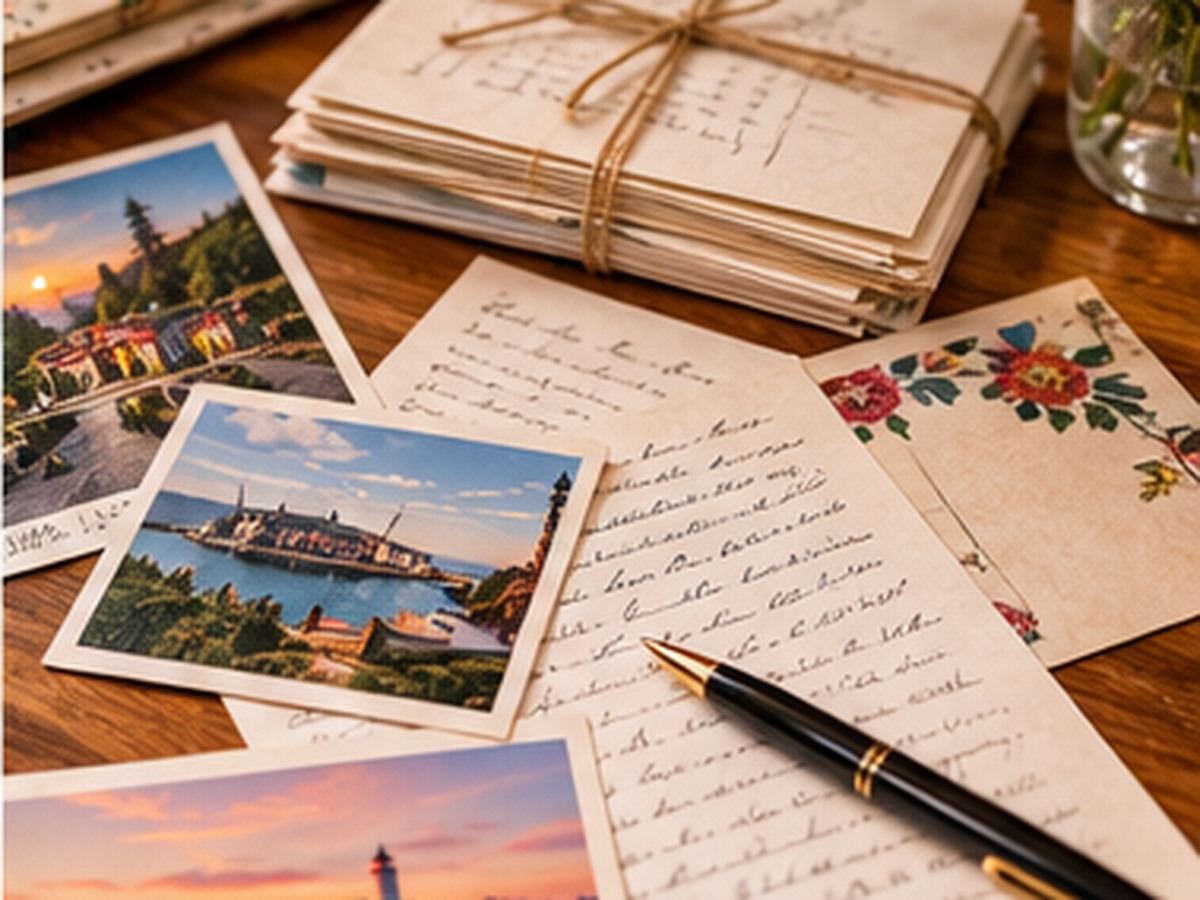
We live in a world where a photograph can be taken and shared in seconds, and a message can cross the country before the kettle boils. That convenience is wonderful. Yet there is something different about finding a note written by someone you love: the familiar slant of a letter, the way they underlined a word, the little sign-off that sounded exactly like them.
A handwritten note does not need to be elegant to become meaningful. It might be a recipe card, a birthday message, a grocery list with a joke in the margin, or a quick reminder tucked into a lunch bag. Its value is not in perfect penmanship. It is in the trace of a real person who took a moment to write.
Save the story, not every scrap
Keeping memories can become overwhelming when every drawer contains another stack of papers. A gentle approach is to choose a small, manageable collection. Perhaps one folder for family letters, one box for meaningful cards, and a few favorite recipes with the original handwriting preserved.
Before storing something, add a little context. Who wrote it? About when? Why does it matter? A note that seems obvious today may be a mystery to a child or grandchild decades from now. A pencil annotation on an archival sleeve or
a separate index card can make the story easier to understand without marking the original.
Invite more than one generation into the conversation
Children can ask relatives about old photographs or recipes. Adults can write down the stories that emerge. Older family members may have details no one else knows: the name of a favorite teacher, the reason a particular holiday dish became a tradition, or what a hometown looked like before a familiar building changed.
Do not pressure anyone to share a painful memory. A respectful question and a willingness to listen are more valuable than completing a family-history checklist. And if a relative prefers to tell a story aloud, an audio recording—with their permission—may preserve their voice alongside written notes.
Write something ordinary today
You do not have to wait for a milestone to begin. Send a postcard to a friend. Write a note to someone who helped you. Tell a child one specific thing you admire about them. Leave a few sentences for a parent or grandparent that they can read whenever they wish.
Try being concrete. Instead of only 'You are wonderful,' write, 'I loved how patiently you helped your neighbor this week.' Specific words have a way of staying with us. They remind us that someone saw what we did and cared enough to remember.
Keep the keepsakes safe
Store important paper away from moisture, direct sunlight, and heat. For irreplaceable documents, consider acid-free sleeves or folders and digital scans as backups. Share copies with relatives when appropriate, especially if a single box is the only place the memories exist.
Not every message will become an heirloom, and that is perfectly fine. The point is not to create a museum of ordinary life. It is to notice that ordinary life is worth remembering. A few words, written with love and kept with care, can become a bridge between people who may never sit at the same table.